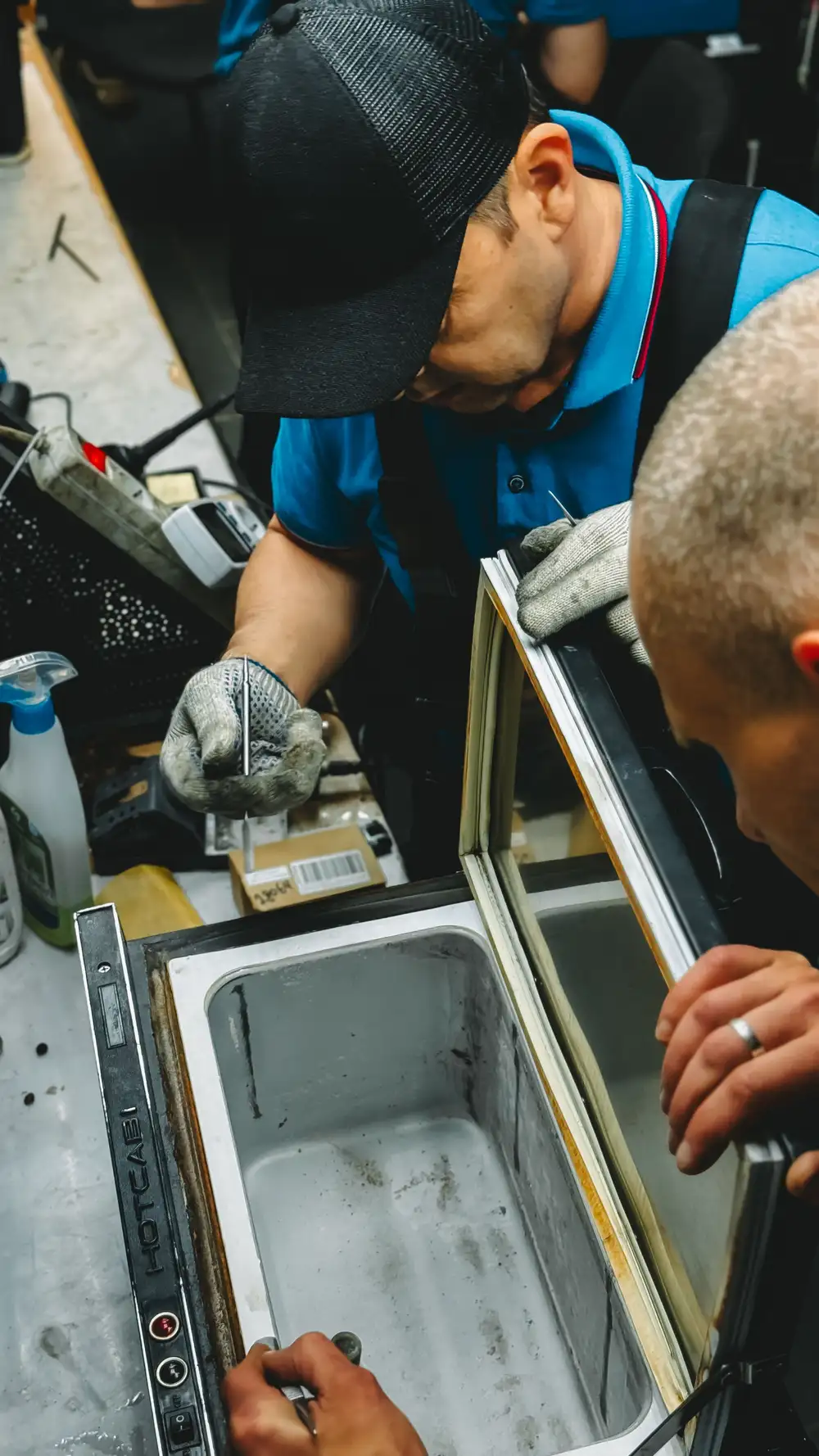
Sellwood's small business base — including the shops and cafes along the SE 13th Avenue antique district — relies on reach-in coolers, prep tables, and the occasional walk-in staying at temperature during business hours. We diagnose commercial refrigeration units before quoting a repair, since a unit that won't hold temperature can come down to several different causes.
Commercial refrigeration calls in Sellwood mostly come from the small business strip along SE 13th Avenue and the surrounding side streets — antique shops with a small break-room fridge, cafes running reach-in coolers and prep tables, and the occasional business with a walk-in cooler tucked in the back. Unlike a residential refrigerator, a commercial unit that's failing during open hours has a direct cost attached to it, whether that's spoiled prep ingredients or product that can't be displayed at temperature. We treat commercial calls with the same diagnostic-first approach as a home refrigerator: confirm whether the issue is the compressor, the door seal, a blocked evaporator coil, or the temperature control before recommending a fix, since commercial units see far more door-open cycles per day than a home fridge and that use pattern changes which components fail first.
Built around the higher-use patterns of a working kitchen or shop.
Testing the compressor and refrigerant circuit for units running longer cycles under commercial use.
Checking gaskets on reach-ins and prep tables, which wear faster under frequent door-open cycles.
Verifying the unit holds safe food-storage temperature consistently, not just at a single reading.
Checking for coil frost or blocked airflow, common in walk-ins with heavy door traffic.
A reach-in cooler or prep table in a Sellwood shop opens far more times per day than a home refrigerator, which puts more wear on door gaskets and hinges and forces the compressor to recover lost cold air more often. That heavier use pattern means a commercial unit's door seal or evaporator coil can wear out well before the compressor itself would, so isolating the actual point of failure — rather than assuming it's the compressor — keeps the repair proportional to the problem.

The most frequent issues we see on Sellwood's commercial calls are worn door gaskets from heavy daily use, a compressor working overtime because of a coil that's frosted over or dirty, and temperature control drift that isn't obvious until product starts sitting a few degrees warmer than it should. A commercial fridge not cooling properly is rarely a single cause — it's usually a combination of one worn part making the compressor work harder than it should, which is why we test the whole system together rather than replacing the first part that looks suspect.
Straight answers — no clicking around.
Call Portland Refrigerator Repair to schedule a same-day or next-day commercial diagnostic visit.
(888) 555-0123